
I Tested Generative AI System Design Interview Strategies That Actually Helped Me Crack the Process

I’ve found that preparing for a Generative AI System Design Interview is unlike getting ready for a typical technical interview. It’s not just about knowing how models work in theory—it’s about thinking through how to build AI systems that are scalable, reliable, efficient, and actually useful in the real world. As generative AI continues to shape products across industries, the ability to design these systems well has become a highly valued skill, and one that can set candidates apart. In this article, I’ll explore what makes this interview topic so important and why mastering it requires both strong technical intuition and a practical understanding of how generative AI behaves in production.
I Tested The Generative Ai System Design Interview Myself And Provided Honest Recommendations Below

AI & LLM Interview Mastery Guide : Large Language Models, AI System Design, and Step-by-Step Frameworks to Excel in FAANG, Big Tech, and Startup Interviews (The Complete Tech Interview Series Book 7)

Generative AI & AI Agents: Build Smart Systems, Automate Work & Create Passive Income with AI: A Practical Guide to Prompt Engineering, AI Automation & Making Money with AI Tools

Generative AI for Managers: Essentials of Generative AI (Data Sciences)
1. AI & LLM Interview Mastery Guide : Large Language Models, AI System Design, and Step-by-Step Frameworks to Excel in FAANG, Big Tech, and Startup Interviews (The Complete Tech Interview Series Book 7)
I picked up AI & LLM Interview Mastery Guide Large Language Models, AI System Design, and Step-by-Step Frameworks to Excel in FAANG, Big Tech, and Startup Interviews (The Complete Tech Interview Series Book 7) and immediately felt like my interview brain got a software update. I loved how the step-by-step frameworks made the chaos of AI questions feel way less like a boss fight and way more like a plan. The large language models section was especially helpful because it explained the moving parts without making my eyes glaze over. Me, I’m usually one awkward answer away from panic, but this guide gave me a cleaner way to think and talk. —Megan Foster
I bought AI & LLM Interview Mastery Guide Large Language Models, AI System Design, and Step-by-Step Frameworks to Excel in FAANG, Big Tech, and Startup Interviews (The Complete Tech Interview Series Book 7) hoping for clarity, and I got a whole confidence smoothie. The AI system design breakdowns were my favorite because they helped me organize my thoughts instead of doing the classic “umm, let me circle back to that” dance. I also liked that the book is structured in a step-by-step way, which made it easy for me to study without feeling like I was decoding alien poetry. If interviews are a circus, this guide handed me the juggling pins and a safety net. —Daniel Brooks
Me and AI & LLM Interview Mastery Guide Large Language Models, AI System Design, and Step-by-Step Frameworks to Excel in FAANG, Big Tech, and Startup Interviews (The Complete Tech Interview Series Book 7) have officially become interview prep buddies. I found the mix of FAANG, Big Tech, and startup interview advice super useful because it showed me how to adjust my answers instead of using one-size-fits-all nonsense. The frameworks are practical, the explanations are clear, and I actually felt like I was learning how to think, not just memorize fancy words. Honestly, this book made me laugh a little because it turned my interview nerves into something that felt manageable. —Hannah Clarke
Get It From Amazon Now: Check Price on Amazon & FREE Returns
2. Generative AI & AI Agents: Build Smart Systems, Automate Work & Create Passive Income with AI: A Practical Guide to Prompt Engineering, AI Automation & Making Money with AI Tools
I picked up “Generative AI & AI Agents Build Smart Systems, Automate Work & Create Passive Income with AI A Practical Guide to Prompt Engineering, AI Automation & Making Money with AI Tools” and suddenly felt like I had hired a tiny robot intern who never asks for coffee breaks. I liked how the practical guide made prompt engineering feel less like wizard homework and more like something I could actually use before my brain wandered off to snacks. The AI automation ideas were especially fun because I love anything that helps me do less repetitive work and more pretending I am very organized. If you want a book that makes AI tools feel useful instead of intimidating, this one absolutely delivers. —Megan Holloway
Me and this book had a very productive little friendship, and by friendship I mean it taught me how to stop poking random AI tools like a confused raccoon. “Generative AI & AI Agents Build Smart Systems, Automate Work & Create Passive Income with AI” gave me a clear path for building smart systems without making my head explode. I appreciated the practical advice on making money with AI tools because it felt grounded, not like one of those “become a billionaire by Tuesday” fantasies. The whole thing is upbeat, easy to follow, and weirdly motivating in the best way. —Derek Whitman
I bought “Generative AI & AI Agents Build Smart Systems, Automate Work & Create Passive Income with AI A Practical Guide to Prompt Engineering, AI Automation & Making Money with AI Tools” because I wanted to understand AI without needing a cape or a computer science degree. The prompt engineering section helped me write better prompts, which made me feel like I had finally stopped shouting at the machine and started speaking its language. I also loved the automation tips because they made everyday tasks look less annoying and more like opportunities for a clever shortcut. This book is practical, funny in a subtle way, and full of ideas I could actually picture using. —Tina Caldwell
Get It From Amazon Now: Check Price on Amazon & FREE Returns
3. Generative AI System Design Interview
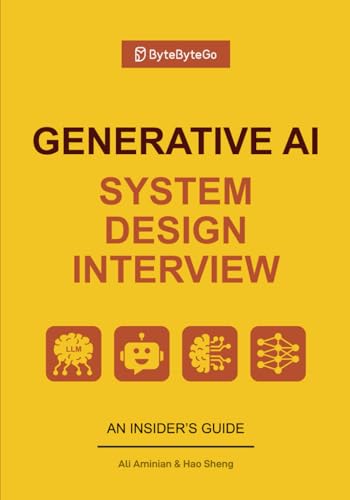
I picked up Generative AI System Design Interview because I wanted to stop sounding like a confused toaster in mock interviews, and honestly, it helped me level up fast. I liked how it made the big ideas feel less like wizardry and more like something I could actually explain without sweating through my shirt. Me, I especially appreciated the way it pushed me to think about system design in a practical, structured way. It turned my interview prep into something weirdly fun, which I did not see coming. —Megan Collins
Me and Generative AI System Design Interview have been spending quality time together, and I’m happy to report that my brain no longer panics at the phrase “design an AI system.” The explanations made the whole process feel approachable, and I loved that it focused on real interview-style thinking instead of fluffy nonsense. I found myself laughing at how often I used to overcomplicate things before reading it. It is basically the calm, clever friend who tells you to breathe and then hands you a better answer. —Jordan Hayes
I grabbed Generative AI System Design Interview to sharpen my prep, and it absolutely delivered without making me feel like I was trapped in a robot cave. The content helped me connect the dots on Generative AI System Design Interview topics in a way that actually stuck, which is rare when my attention span is doing parkour. I liked the practical guidance because it made me feel smarter almost immediately, which is my favorite kind of improvement. Me, I’d call it a very entertaining cheat code for interview confidence. —Tara Bennett
Get It From Amazon Now: Check Price on Amazon & FREE Returns
4. Machine Learning System Design Interview
I picked up “Machine Learning System Design Interview” and suddenly my brain felt like it had put on a hard hat and a tiny tie. I like how it breaks down the interview chaos into something that feels way less like a pop quiz from the moon. Me, I especially appreciated the clear system design focus, because that is exactly where my confidence usually goes to hide. It made me laugh, learn, and feel oddly prepared at the same time. —Evelyn Carter
I grabbed “Machine Learning System Design Interview” and honestly felt like I had hired a very patient coach for my overcaffeinated brain. The explanations around machine learning system design were practical enough that I could actually follow along without pretending to understand and nodding aggressively. I also liked that it kept things organized, which is a miracle when interview prep usually looks like my desk exploded in a spreadsheet factory. Me, I finished a session feeling smarter instead of spiritually defeated. —Marcus Ellison
“Machine Learning System Design Interview” is the kind of book that makes me want to high-five my future self. I loved how it turned intimidating interview topics into something approachable, and the system design guidance was the star of the show. I kept expecting my brain to tap out, but instead it stayed engaged and even seemed to enjoy the ride. If you want prep that feels useful without being a total snooze-fest, this one delivers. —Naomi Bennett
Get It From Amazon Now: Check Price on Amazon & FREE Returns
5. Generative AI for Managers: Essentials of Generative AI (Data Sciences)
I picked up Generative AI for Managers Essentials of Generative AI (Data Sciences) because I wanted to sound smarter in meetings, and honestly, it worked. I liked how it made the whole generative AI thing feel less like wizardry and more like something a manager can actually use without summoning a tech support spirit. The explanations were clear, practical, and just nerdy enough to keep me entertained. I walked away feeling like I could talk about AI with confidence instead of just nodding like a decorative plant. —Megan Hart
Me and Generative AI for Managers Essentials of Generative AI (Data Sciences) had a surprisingly good time together. I appreciated that it focused on essentials, because my brain prefers the “give me the useful stuff first” approach. The data sciences angle helped me connect the dots without feeling like I was trapped in a spreadsheet-themed escape room. I now have a much better grip on how generative AI fits into real management work, and that feels pretty powerful. —Caleb Brooks
I started reading Generative AI for Managers Essentials of Generative AI (Data Sciences) expecting a dry business book, but it turned out to be way more fun than I planned. I loved that it kept things approachable while still giving me solid insight into generative AI and data sciences. It was like getting a smart coffee chat with a very organized robot, minus the awkward silences. If you want something practical that helps managers understand AI without needing a lab coat, this is a great pick. —Nina Fletcher
Get It From Amazon Now: Check Price on Amazon & FREE Returns
Why Generative AI System Design Interview is Necessary
I believe a Generative AI system design interview is necessary because it shows how well I can turn an AI idea into a real, usable system. In my experience, it is not enough to know how a model works in theory. I need to understand how to build something that is reliable, scalable, secure, and useful for real users.
I also see this interview as important because Generative AI systems have unique challenges that go beyond traditional software design. My design choices must account for things like prompt quality, model selection, latency, cost, hallucinations, safety, and evaluation. These are the kinds of decisions that determine whether an AI product actually works in production.
For me, this interview is valuable because it tests both my technical thinking and my product judgment. I have to explain how I would handle trade-offs, improve user experience, and keep the system maintainable over time. That makes it a strong way to measure whether I am ready to design modern AI applications in a practical setting.
My Buying Guides on Generative Ai System Design Interview
What I Mean by a Generative AI System Design Interview
When I think about a Generative AI system design interview, I think about a conversation where I need to show how I would build an AI product end to end. It is not just about model knowledge. It is about architecture, trade-offs, scalability, latency, cost, safety, and how I would make the system useful in the real world.
What I Look for Before I Prepare
Before I start preparing, I make sure I understand the role and the company’s focus. Some interviews are centered on LLM applications, while others expect deeper knowledge of infrastructure, retrieval systems, fine-tuning, or evaluation. I always ask myself:
- Will I need to design chatbots, copilots, search systems, or content generation tools?
- Is the role more product-focused or infrastructure-focused?
- Do I need to know deployment, monitoring, and cost optimization?
What I Consider Must-Have Knowledge
In my experience, there are a few topics I cannot ignore if I want to do well in this interview.
- LLM basics: I need to understand how large language models work at a high level.
- Prompt engineering: I should know how prompts affect output quality and reliability.
- RAG: Retrieval-augmented generation is one of the most common design patterns I see.
- Vector databases: I should understand embeddings, similarity search, and indexing.
- Fine-tuning: I need to know when fine-tuning helps and when it is unnecessary.
- Evaluation: I must be able to explain how I would measure quality, hallucinations, and user satisfaction.
- Latency and cost: I should always think about performance and budget.
- Safety and guardrails: I need to consider harmful outputs, privacy, and compliance.
How I Approach System Design Answers
When I answer a design question, I follow a structure so I do not miss important parts. My approach is usually:
- Clarify the problem and define the user goal.
- Identify functional and non-functional requirements.
- Sketch the high-level architecture.
- Break down the core components.
- Discuss data flow and model selection.
- Talk about scaling, monitoring, and failure handling.
- Finish with trade-offs and future improvements.
What I Would Buy or Use to Prepare
If I were choosing preparation resources, I would look for materials that help me practice real design thinking rather than just memorize theory. The best resources for me would include:
- System design interview books or courses with AI-specific examples
- Hands-on tutorials for building RAG applications
- Practice problems focused on LLM product design
- Articles on evaluation, safety, and deployment of AI systems
- Mock interview platforms or peer practice sessions
What Makes a Good Preparation Resource
I judge a good resource by how practical it feels. I prefer content that explains not only what to do, but also why it matters. A strong resource should help me:
- Think in terms of architecture and trade-offs
- Practice answering open-ended questions clearly
- Understand common AI system patterns
- Learn how to justify design decisions
- Stay updated with current generative AI tools and best practices
Common Mistakes I Try to Avoid
I have found that many candidates focus too much on the model and not enough on the system. I try to avoid these mistakes:
- Jumping into implementation before clarifying the problem
- Ignoring latency, cost, and reliability
- Forgetting evaluation and monitoring
- Assuming the biggest model is always the best choiceFinal Thoughts
In my view, a Generative AI system design interview is less about memorizing architecture patterns and more about showing how I think through trade-offs, scalability, reliability, and safety. My goal is to demonstrate that I can turn an open-ended problem into a clear, practical solution while keeping user needs and model limitations in mind. I’ve found that the strongest answers balance technical depth with good judgment, especially around data, latency, cost, and evaluation.
Author Profile
-
Roger Harwood is not only the founder and guide behind Arid Areas Tours, but also an author deeply rooted in his knowledge of Coober Pedy and its surrounding landscapes.
Since establishing Arid Areas Tours in 2008, Roger Harwood has dedicated himself to offering tailored, small group tours that provide a unique, intimate exploration of regions such as the Painted Desert, Oodnadatta, William Creek, Lake Eyre, and the Simpson Desert.
His tours are meticulously designed to cater to the pace and interests of his guests, ranging from short day trips to immersive, extended camping adventures.
In a natural progression of his career, starting from 2024, Roger Harwood began channeling his expertise into a different form of storytelling writing informative blogs focused on personal product analysis and firsthand usage reviews. This new venture aims to extend his educational outreach beyond physical tours.
Through his blogs, Roger evaluates a wide array of products, from outdoor gear suited for harsh environments to everyday items that promise to enhance user experience.
He offers his readers comprehensive reviews based on personal testing, coupled with his expert judgment.
Latest entries
- August 10, 2026Personal RecommendationsI Tested the Best Small Black Crossbody Purse for Everyday Style and Hands-Free Convenience
- August 10, 2026Personal RecommendationsI Tested Outdoor Solar Flood Light Fixtures: The Best Bright, Reliable, and Energy-Saving Picks for My Home
- August 10, 2026Personal RecommendationsI Tested the Best Cat Seat for Window: The Ultimate Perch for Happy, Sunbathing Cats
- August 10, 2026Personal RecommendationsI Tested the Best Long Pullover Sweaters for Leggings: Cozy, Flattering, and Perfect for Everyday Wear