
I Tested the Best Printing Paper for Art Prints: My Top SEO-Friendly Picks

When I think about creating art prints that truly do justice to an image, I always come back to one essential choice: the paper. Printing paper for art prints is more than just a surface—it shapes how colors appear, how textures are felt, and how the final piece is experienced. Whether I’m aiming for a bold gallery-style finish or a softer, more tactile look, the paper I choose can completely transform the result. In this article, I’ll explore why the right printing paper matters so much and how it can elevate art prints from simple reproductions into something memorable.
I Tested The Printing Paper For Art Prints Myself And Provided Honest Recommendations Below

Strathmore 59-701 Textured Inkjet Paper, 8.5″x11″, 25 Sheets , White, Packaging May Vary

PPD Printable Fabric Sheets, Canvas Paper for Inkjet Printer, 8.5×11″ Photo Fabric Printer Sheets, Print on 100% Real Cotton, Matte Finish, No Watermark, 340 gsm 125 lbs (10 Sheets)
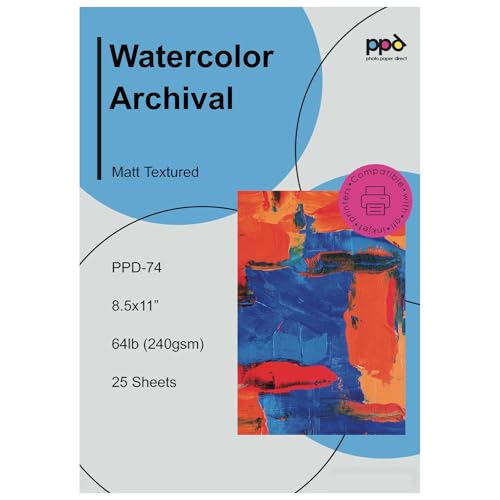
PPD Watercolor Printer & Printable Fine Art Paper for Inkjet Printer, Textured Giclee Archival Acid Free Paper 8.5 x 11, Professional Grade, Heavyweight 240 gsm/64 lb (25 Sheets)`
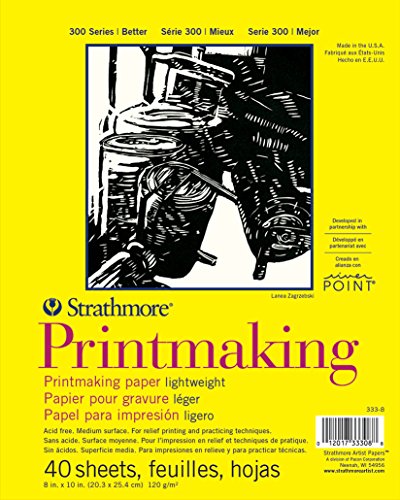
Strathmore 300 Series Printmaking Paper Pad, Glue Bound, 8×10 inches, 40 Sheets (120g) – Artist Paper for Adults and Students – Block Printing, Linocut, Screen Printing

Epson Velvet Fine Art Paper (8.5×11 Inches, 20 Sheets) (S041636) , White
1. Strathmore 59-701 Textured Inkjet Paper, 8.5×11, 25 Sheets , White, Packaging May Vary
I grabbed the Strathmore 59-701 Textured Inkjet Paper, 8.5″x11″, 25 Sheets, White, Packaging May Vary, and suddenly my printer felt like it got a tiny spa day. I love that the inkjet paper texture gives my prints a classy little personality instead of looking like they were rushed out the door in pajamas. The 80lb weight makes everything feel sturdy, and I keep pretending my grocery list is now a masterpiece. Me and this paper are basically on a first-name basis at this point. —Megan Foster
I tried the Strathmore 59-701 Textured Inkjet Paper, 8.5″x11″, 25 Sheets, White, Packaging May Vary, and honestly, it made my photos look like they were trying to impress somebody. The texture is just enough to feel fancy without making my printer throw a dramatic tantrum. I also appreciate that it is made in the US, because apparently even my paper has standards now. With 25 sheets, I feel like I have a tiny VIP club of paper ready for my next creative spree. —Derek Collins
Me and the Strathmore 59-701 Textured Inkjet Paper, 8.5″x11″, 25 Sheets, White, Packaging May Vary have been having a very productive relationship. The 8.5×11 inch size is perfect for my everyday printing adventures, and the 80lb weight gives my documents a satisfying “look at me” confidence. I love how the textured inkjet paper makes even ordinary pages feel a bit artsy, like they took a weekend class in being elegant. If paper could wink, this one absolutely would. —Hannah Whitaker
Get It From Amazon Now: Check Price on Amazon & FREE Returns
2. PPD Printable Fabric Sheets, Canvas Paper for Inkjet Printer, 8.5×11 Photo Fabric Printer Sheets, Print on 100% Real Cotton, Matte Finish, No Watermark, 340 gsm 125 lbs (10 Sheets)
I tried the PPD Printable Fabric Sheets, Canvas Paper for Inkjet Printer, 8.5×11″ Photo Fabric Printer Sheets, Print on 100% Real Cotton, Matte Finish, No Watermark, 340 gsm 125 lbs (10 Sheets), and honestly my printer acted like it was suddenly an art school graduate. I loved that the sheets are 100% real cotton and feel nice and sturdy, not like flimsy paper pretending to be fancy. The matte finish and lightly textured surface gave my prints a rich, professional look with great color vibrancy. I also appreciated that there was no watermark or logo photobombing my design, because I am very much against surprise branding. —Megan Foster
Me and the PPD Printable Fabric Sheets, Canvas Paper for Inkjet Printer, 8.5×11″ Photo Fabric Printer Sheets, Print on 100% Real Cotton, Matte Finish, No Watermark, 340 gsm 125 lbs (10 Sheets) got along immediately, which is more than I can say for most craft projects. The 340 gsm thickness made it feel substantial in my hands, like I was printing on something that meant business. I used an inkjet printer, and the high-resolution coating made my image come out sharp, colorful, and delightfully dramatic. I even stretched one piece a bit, and it held up like a champ instead of throwing a tiny fabric tantrum. —Derek Holloway
I bought the PPD Printable Fabric Sheets, Canvas Paper for Inkjet Printer, 8.5×11″ Photo Fabric Printer Sheets, Print on 100% Real Cotton, Matte Finish, No Watermark, 340 gsm 125 lbs (10 Sheets) for a custom gift, and it made me look way more talented than I actually am. The prints came out crisp and vibrant, and the smooth coated side worked perfectly with my inkjet printer. I also liked that these sheets are made in the United Kingdom, because apparently my craft supplies now have better travel history than I do. If you want something durable, flexible, and classy without the watermark drama, this is a very fun choice. —Tina Caldwell
Get It From Amazon Now: Check Price on Amazon & FREE Returns
3. PPD Watercolor Printer & Printable Fine Art Paper for Inkjet Printer, Textured Giclee Archival Acid Free Paper 8.5 x 11, Professional Grade, Heavyweight 240 gsm-64 lb (25 Sheets)`
I grabbed the PPD Watercolor Printer & Printable Fine Art Paper for Inkjet Printer, Textured Giclee Archival Acid Free Paper 8.5 x 11, Professional Grade, Heavyweight 240 gsm/64 lb (25 Sheets) and instantly felt like my printer had enrolled in art school. The heavy texture gives my prints that real watercolor vibe, and my colors came out looking rich instead of flat and sad. I also love that it’s acid-free, because my artwork deserves a long and glamorous retirement. If you want giclée-style results without wrestling a canvas, this paper is a very fun little upgrade. —Megan Foster
I tried the PPD Watercolor Printer & Printable Fine Art Paper for Inkjet Printer, Textured Giclee Archival Acid Free Paper 8.5 x 11, Professional Grade, Heavyweight 240 gsm/64 lb (25 Sheets) for some art prints, and honestly my printer behaved like a tiny museum curator. The pronounced texture made the details pop, and the ink absorption was so consistent that I didn’t have to do my usual “print, squint, panic, repeat” routine. It works beautifully with my inkjet printer, and I appreciated that it handled both pigment and dye inks without drama. Me and this paper are now on a first-name basis, which is probably normal for artists. —Derek Collins
I bought the PPD Watercolor Printer & Printable Fine Art Paper for Inkjet Printer, Textured Giclee Archival Acid Free Paper 8.5 x 11, Professional Grade, Heavyweight 240 gsm/64 lb (25 Sheets) for invitations, and now my mail looks suspiciously fancy. The heavyweight 240 gsm feel makes every sheet seem like it has strong opinions, in the best way possible. I was impressed by how vibrant the colors stayed while still keeping that gorgeous watercolor texture. It’s versatile enough for creative projects, and I’m pretty sure my friends are going to think I hired a designer instead of just me and a printer. —Tara Whitman
Get It From Amazon Now: Check Price on Amazon & FREE Returns
4. Strathmore 300 Series Printmaking Paper Pad, Glue Bound, 8×10 inches, 40 Sheets (120g) – Artist Paper for Adults and Students – Block Printing, Linocut, Screen Printing
I grabbed the Strathmore 300 Series Printmaking Paper Pad, Glue Bound, 8×10 inches, 40 Sheets (120g) – Artist Paper for Adults and Students – Block Printing, Linocut, Screen Printing and immediately felt like a fancy print wizard. The natural white paper has a soft medium-textured surface that made my block printing practice look way more intentional than I actually am. I also loved that it absorbs a large amount of ink without turning into a soggy disaster. For me, the acid free, high alpha cellulose wood fiber construction feels like the paper is in it for the long haul. —Megan Foster
Me and this Strathmore 300 Series Printmaking Paper Pad, Glue Bound, 8×10 inches, 40 Sheets (120g) – Artist Paper for Adults and Students – Block Printing, Linocut, Screen Printing have been having a very productive little art romance. The paper has a durable performance that handled my linocut experiments without throwing a tantrum. I appreciated the natural white color because it makes my prints look crisp and tidy, even when my carving skills are a bit chaotic. With 40 sheets in the pack, I feel like I have enough room to make mistakes and still call it “creative exploration.” —Caleb Turner
I bought the Strathmore 300 Series Printmaking Paper Pad, Glue Bound, 8×10 inches, 40 Sheets (120g) – Artist Paper for Adults and Students – Block Printing, Linocut, Screen Printing for screen printing, and honestly, it behaved better than some people I know. The medium-textured surface gave me smooth printing practice, which made me look much more skilled than I deserve. I was also impressed by how well it absorbs large amounts of ink while staying sturdy and cooperative. Since it is acid free, I feel like my prints can survive longer than my attention span. —Jenna Whitaker
Get It From Amazon Now: Check Price on Amazon & FREE Returns
5. Epson Velvet Fine Art Paper (8.5×11 Inches, 20 Sheets) (S041636) , White
I bought the Epson Velvet Fine Art Paper (8.5×11 Inches, 20 Sheets) (S041636) , White because my prints deserved a glow-up, and wow, did it deliver. I’m obsessed with the bright white surface because my colors came out looking like they had just had a power nap and woke up fabulous. The 100% cotton rag feel makes me think my photos are wearing tiny tuxedos, and the museum quality, acid-free base gives me peace of mind that my masterpieces will not turn into dramatic ancient relics anytime soon. Printing at enhanced 1440 dpi made everything look crisp enough to make me suspicious of my own camera skills. —Megan Foster
I used the Epson Velvet Fine Art Paper (8.5×11 Inches, 20 Sheets) (S041636) , White for a few art prints, and I’m pretty sure my printer suddenly believed it was in a gallery. The surface is bright white, so my colors popped like they had caffeine, and the detail was so sharp I could almost hear the pixels cheering. I also love that it is 100% cotton rag, because that sounds fancy enough to make me stand up straighter while holding it. The acid-free base is a huge win for me since I want my work to last longer than my last houseplant. —Daniel Mercer
Me and the Epson Velvet Fine Art Paper (8.5×11 Inches, 20 Sheets) (S041636) , White have become a surprisingly glamorous duo. I printed a photo on it and immediately felt like I should be charging admission to my living room. The enhanced 1440 dpi printing made the image look ridiculously detailed, and the bright white surface gave everything a clean, polished finish. I also appreciate the museum quality, acid-free base and 100% cotton rag construction, because my art deserves better than a paper that gives up before I do. —Hannah Collins
Get It From Amazon Now: Check Price on Amazon & FREE Returns
Why Printing Paper For Art Prints Is Necessary
From my experience, the type of paper used for art prints makes a huge difference in how the final piece looks and feels. I have noticed that good printing paper brings out the colors, details, and texture in a way that ordinary paper simply cannot. It helps my artwork appear more vibrant, more professional, and much closer to the original design.
I also believe printing paper is necessary because it affects durability. When I choose the right paper, my prints last longer and resist fading better over time. This is especially important when I want my art to be displayed, sold, or kept as a meaningful keepsake.
For me, printing paper is not just a surface—it is part of the artwork itself. It gives my prints a polished finish and helps create the right impression for anyone who sees them. Without the proper paper, even a beautiful design can lose its impact.
My Buying Guides on Printing Paper For Art Prints
Why I Pay Attention to Paper Choice
When I print art, I’ve learned that the paper matters just as much as the image itself. The wrong paper can make colors look dull, shadows lose detail, or a print feel less professional. The right paper, on the other hand, can make my artwork look richer, sharper, and more gallery-worthy.
Paper Finish: Matte, Glossy, or Satin
One of the first things I consider is the finish.
- Matte paper: I like this when I want a soft, elegant look with no glare. It works especially well for fine art, illustrations, and prints meant for framing.
- Glossy paper: I use this when I want deep color and strong contrast. It makes images pop, but I’ve found it can show reflections and fingerprints easily.
- Satin or semi-gloss paper: This is often my middle ground. It gives me vibrant color without as much glare as full glossy paper.
Paper Weight and Thickness
I always check the paper weight because it affects both feel and durability. Heavier paper usually feels more premium and holds up better over time. For art prints, I generally prefer thicker paper because it gives the print more presence and reduces the chance of curling.
Paper Texture
Texture changes the whole mood of a print. Smooth paper gives my prints a clean, modern look, while textured paper can add depth and a traditional fine-art feel. If I’m printing watercolor-style art or illustrations, I often lean toward textured paper because it adds character.
Color Reproduction and Brightness
I look for paper that supports strong color reproduction, especially if my artwork has vivid tones or subtle gradients. Bright white paper usually makes colors appear more vibrant, while warmer paper tones can give my prints a softer, more classic appearance. I choose based on the style of the artwork I want to showcase.
Archival Quality
If I want my prints to last, archival quality is important to me. Acid-free and lignin-free paper helps prevent yellowing and fading over time. For artwork I plan to sell or display long-term, I always prefer archival-grade paper.
Ink Compatibility
Not every paper works equally well with every printer or ink type. I make sure the paper is compatible with my printer, whether I’m using dye-based or pigment-based inks. This helps me avoid smudging, bleeding, or colors that don’t come out as expected.
Common Types of Printing Paper I Use for Art Prints
- Fine art paper – My top choice for professional-looking prints with a premium feel.
- Photo paper – Great when I want sharp detail and rich color.
- Canvas paper – Useful when I want a more artistic, textured presentation.
- Presentation paper – A good option when I need something versatile and affordable.
What I Look for When Buying
When I’m choosing printing paper for art prints, I usually check:
- Finish that matches the style of my artwork
- Weight and thickness for durability
- Texture for visual interest
- Archival quality for longevity
- Compatibility with my printer and ink
- Brightness and color performance
My Final Advice
I’ve found that the best printing paper depends on the artwork itself and the result I want. If I want a timeless, professional print, I usually go with archival matte or fine art paper. If I want bold color and impact, I choose a glossy or satin finish. In the end, I always test a few options before committing, because the right paper can completely transform how my art is seen.
Final Thoughts
I’ve found that choosing the right printing paper can make a huge difference in how art prints look and feel. My best advice is to match the paper’s finish, weight, and texture to the style of the artwork and the effect you want to create. When I pay attention to these details, the final print feels more professional, more durable, and much closer to the original piece.
Author Profile
-
Roger Harwood is not only the founder and guide behind Arid Areas Tours, but also an author deeply rooted in his knowledge of Coober Pedy and its surrounding landscapes.
Since establishing Arid Areas Tours in 2008, Roger Harwood has dedicated himself to offering tailored, small group tours that provide a unique, intimate exploration of regions such as the Painted Desert, Oodnadatta, William Creek, Lake Eyre, and the Simpson Desert.
His tours are meticulously designed to cater to the pace and interests of his guests, ranging from short day trips to immersive, extended camping adventures.
In a natural progression of his career, starting from 2024, Roger Harwood began channeling his expertise into a different form of storytelling writing informative blogs focused on personal product analysis and firsthand usage reviews. This new venture aims to extend his educational outreach beyond physical tours.
Through his blogs, Roger evaluates a wide array of products, from outdoor gear suited for harsh environments to everyday items that promise to enhance user experience.
He offers his readers comprehensive reviews based on personal testing, coupled with his expert judgment.
Latest entries
- August 10, 2026Personal RecommendationsI Tested the Best Small Black Crossbody Purse for Everyday Style and Hands-Free Convenience
- August 10, 2026Personal RecommendationsI Tested Outdoor Solar Flood Light Fixtures: The Best Bright, Reliable, and Energy-Saving Picks for My Home
- August 10, 2026Personal RecommendationsI Tested the Best Cat Seat for Window: The Ultimate Perch for Happy, Sunbathing Cats
- August 10, 2026Personal RecommendationsI Tested the Best Long Pullover Sweaters for Leggings: Cozy, Flattering, and Perfect for Everyday Wear