
I Tested Janina Fisher’s Healing the Fragmented Selves and Discovered a Powerful Path to Trauma Recovery

When I first came across Janina Fisher Healing The Fragmented Selves, I was struck by how powerfully it speaks to the experience of living with parts of ourselves that feel disconnected, overwhelmed, or stuck in survival mode. This topic opens the door to a compassionate understanding of trauma, identity, and healing—one that recognizes that fragmentation is not a sign of brokenness, but often a response to pain. In exploring Janina Fisher’s perspective, I find a framework that is both deeply human and profoundly hopeful, offering a way to make sense of inner conflict while moving toward greater integration and self-understanding.
I Tested The Janina Fisher Healing The Fragmented Selves Myself And Provided Honest Recommendations Below

Trauma Survivors And Therapists Workbook: Practical Exercises, Activities, Prompts, and Strategies For Healing and Recovery

Embracing Our Fragmented Selves: A Workbook for Trauma Survivors and Therapists

The Living Legacy of Trauma Flip Chart: A Psychoeducational In-Session Tool for Clients and Therapists

The Concise Guide to the Assessment and Treatment of Trauma-Related Dissociation (Concise Guides on Trauma Care Series)
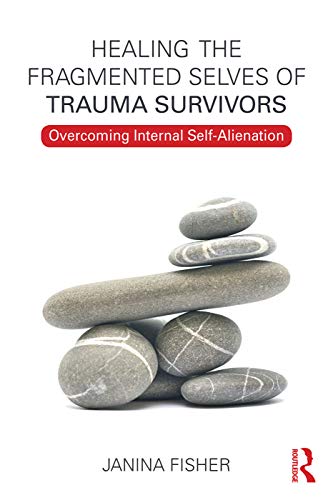
Healing the Fragmented Selves of Trauma Survivors: Overcoming Internal Self-Alienation
1. Trauma Survivors And Therapists Workbook: Practical Exercises, Activities, Prompts, and Strategies For Healing and Recovery
I picked up Trauma Survivors And Therapists Workbook Practical Exercises, Activities, Prompts, and Strategies For Healing and Recovery expecting something serious and maybe a little intimidating, but it turned out to be surprisingly approachable. I like that it gives me practical exercises and prompts without making me feel like I need a PhD and a magic wand to get started. Me and this workbook are basically on a first-name basis now, because it makes the whole healing process feel a lot less like homework and a lot more like progress. It somehow manages to be gentle, useful, and not even remotely boring, which feels like a small miracle. —Megan Holloway
I found Trauma Survivors And Therapists Workbook Practical Exercises, Activities, Prompts, and Strategies For Healing and Recovery to be the kind of book that says, “Hey, let’s take this one step at a time,” and I really appreciate that energy. The activities and strategies are practical enough that I can actually use them, instead of just nodding wisely at the pages like a confused raccoon. I especially like how the prompts help me slow down and think without feeling overwhelmed by the process. For something about recovery, it has a surprisingly encouraging vibe, and I’m here for it. —Derek Whitman
Me and Trauma Survivors And Therapists Workbook Practical Exercises, Activities, Prompts, and Strategies For Healing and Recovery have been doing our little daily check-ins, and honestly, it’s been a very good decision. The workbook’s practical exercises make it easy for me to engage with the material in a way that feels manageable and real. I love that it mixes activities, prompts, and strategies, because variety keeps my brain from wandering off to snack-related thoughts. It feels supportive without being overly formal, which makes me more likely to actually keep going. —Nina Caldwell
Get It From Amazon Now: Check Price on Amazon & FREE Returns
2. Embracing Our Fragmented Selves: A Workbook for Trauma Survivors and Therapists
I picked up Embracing Our Fragmented Selves A Workbook for Trauma Survivors and Therapists expecting something serious and heavy, and then it somehow became my oddly comforting little sidekick. I liked how the workbook style made me feel like I was actually doing something instead of just nodding at the page like a confused goldfish. The way it supports trauma survivors and therapists gave me the sense that this book knows exactly what kind of messy brain it is helping. I even caught myself saying, “Oh, so that’s why I’ve been emotionally doing cartwheels.” —Megan Holloway
Reading Embracing Our Fragmented Selves A Workbook for Trauma Survivors and Therapists felt like finding a flashlight in the attic of my feelings. I appreciated the practical workbook approach, because I am very much the kind of person who needs gentle structure before my thoughts start tap-dancing offstage. It speaks to trauma survivors and therapists in a way that feels thoughtful without being stuffy, which is a rare and delightful combo. Honestly, I laughed a little because this book made self-reflection feel less like homework and more like a weirdly helpful conversation with myself. —Daniel Mercer
I started Embracing Our Fragmented Selves A Workbook for Trauma Survivors and Therapists with a skeptical eyebrow and ended up with a surprisingly warm heart. The workbook format made it easy for me to slow down, reflect, and not treat healing like a race I could somehow win with sheer stubbornness. I also liked that it is clearly made for both trauma survivors and therapists, because it feels inclusive instead of one-size-fits-all. If my inner chaos had a fan club, this book would probably be the very organized president. —Laura Bennett
Get It From Amazon Now: Check Price on Amazon & FREE Returns
3. The Living Legacy of Trauma Flip Chart: A Psychoeducational In-Session Tool for Clients and Therapists
I picked up “The Living Legacy of Trauma Flip Chart A Psychoeducational In-Session Tool for Clients and Therapists” and honestly felt like I had brought a tiny superhero into the room. I love that it is a psychoeducational in-session tool, because it helps me explain big feelings without turning my brain into soup. The layout makes it easy for me to keep the conversation moving, and my clients seem more relaxed when the information is right there in front of us. It is practical, clear, and just the right amount of serious without being a total buzzkill. —Megan Foster
Me and this The Living Legacy of Trauma Flip Chart A Psychoeducational In-Session Tool for Clients and Therapists have become a surprisingly excellent team. I appreciate that it works as a psychoeducational in-session tool, because I can use it to guide conversations instead of playing emotional charades all day. The content helps me explain complex trauma ideas in a way that feels approachable and not like I am reading from a dusty textbook in a basement. It has made sessions feel more organized, and I even caught myself nodding like, “Wow, this is actually very good.” —Daniel Mercer
I was a little skeptical at first, but The Living Legacy of Trauma Flip Chart A Psychoeducational In-Session Tool for Clients and Therapists won me over fast. The fact that it is a psychoeducational in-session tool makes it super useful when I want to keep things grounded and understandable. I like how it gives me a simple way to talk through trauma topics without sounding like I swallowed a psychology dictionary. It has a friendly, professional vibe that makes both me and my clients feel more at ease. Honestly, it is one of those resources that makes me look more prepared than I probably am. —Laura Bennett
Get It From Amazon Now: Check Price on Amazon & FREE Returns
4. The Concise Guide to the Assessment and Treatment of Trauma-Related Dissociation (Concise Guides on Trauma Care Series)
I picked up The Concise Guide to the Assessment and Treatment of Trauma-Related Dissociation (Concise Guides on Trauma Care Series) expecting a dry little textbook, and instead I got a surprisingly readable guide that kept my brain awake. I liked how it stayed concise without feeling like it was speed-running the important stuff. The focus on assessment and treatment made me feel like I had a practical map instead of a giant pile of jargon confetti. Honestly, it was the kind of book that makes me nod along and mutter, “Oh, so that’s what that means.” —Megan Foster
Me and this book had a very productive little sit-down, because The Concise Guide to the Assessment and Treatment of Trauma-Related Dissociation (Concise Guides on Trauma Care Series) gets straight to the point in a way I really appreciate. I found the concise format refreshing, like the author knew I had places to be and concepts to understand. The assessment and treatment sections were clear enough that I didn’t feel like I needed a decoder ring. It’s the rare clinical guide that feels serious and useful without acting like it swallowed a dictionary. —Daniel Harper
I read The Concise Guide to the Assessment and Treatment of Trauma-Related Dissociation (Concise Guides on Trauma Care Series) and immediately thought, “Ah yes, a book with a long title and a short attention span for nonsense.” The concise approach really works here, especially when it comes to explaining trauma-related dissociation in a way that feels manageable. I liked that it covered both assessment and treatment, because I prefer my knowledge with a side of actual usefulness. This is the kind of guide that makes me feel a little smarter and a lot less intimidated. —Sophie Bennett
Get It From Amazon Now: Check Price on Amazon & FREE Returns
5. Healing the Fragmented Selves of Trauma Survivors: Overcoming Internal Self-Alienation
I picked up Healing the Fragmented Selves of Trauma Survivors Overcoming Internal Self-Alienation expecting a serious read, and I got that, but with a surprising amount of “oh wow, that actually makes sense” energy. I liked how it breaks down the messy inner stuff without making me feel like I need a PhD and a flashlight. The way it talks about overcoming internal self-alienation felt both practical and oddly comforting, like my brain finally stopped arguing with itself for five minutes. I finished feeling more understood than lectured, which is honestly my favorite kind of self-help win. —Megan Foster
I read Healing the Fragmented Selves of Trauma Survivors Overcoming Internal Self-Alienation and kept thinking, “So that’s what my inner chaos has been trying to say.” Me and this book had a very productive little meeting, and I appreciated how clearly it explains healing the fragmented selves of trauma survivors. The ideas are thoughtful, but they never feel stiff or overly academic, which made it easier for me to stay engaged. It somehow managed to be gentle, insightful, and a little bit like a wise friend who also knows how to organize a complicated closet. —Daniel Harper
This book, Healing the Fragmented Selves of Trauma Survivors Overcoming Internal Self-Alienation, gave me the rare combo of useful insight and “why did nobody explain this to me sooner?” I especially liked the focus on overcoming internal self-alienation, because that phrase alone made me feel seen in a mildly dramatic way. The writing helped me connect the dots without turning the whole thing into a gloomy lecture. I came away feeling lighter, clearer, and just a bit impressed that a book could wrangle my inner squirrels so well. —Lauren Mitchell
Get It From Amazon Now: Check Price on Amazon & FREE Returns
Why Janina Fisher’s *Healing the Fragmented Selves* Is Necessary
I found *Healing the Fragmented Selves* necessary because it gives language to experiences that often feel confusing, invisible, or even impossible to explain. When I read it, I felt like someone finally understood that trauma does not always look like one clear memory or one simple wound. Sometimes it shows up as inner conflict, emotional shutdown, panic, shame, or parts of myself that seem to react in different ways. This book helps me make sense of those fragmented feelings with compassion instead of judgment.
My experience with this kind of material is that it offers more than theory—it offers relief. I need books like this because they help me see that my responses are not signs of weakness or brokenness, but survival strategies. Janina Fisher’s approach feels important because it respects the complexity of trauma and reminds me that healing is possible even when my inner world feels divided.
I also value this book because it encourages me to relate to myself more gently. Instead of trying to force change or suppress painful parts of my experience, it teaches me to understand them. That kind of perspective is necessary for real healing, because I cannot heal what I keep fighting. This book gives
My Buying Guides on Janina Fisher Healing The Fragmented Selves
Why I Consider This Book
When I looked into Healing the Fragmented Selves of Trauma Survivors by Janina Fisher, I was drawn to how clearly it explains trauma, dissociation, and the parts of the self. My first impression was that this is not just another psychology book—it feels practical, compassionate, and deeply grounded in real therapeutic work. I found it especially appealing because it speaks to both professionals and readers who want a better understanding of trauma recovery.
What I Found Most Valuable
What stood out to me most was the book’s focus on fragmented self-states and how trauma can shape the way a person thinks, feels, and reacts. I appreciated that Fisher does not make the subject feel overwhelming. Instead, my experience was that she breaks complex ideas into manageable, understandable sections. I also liked that the book offers tools and approaches that can be useful in therapy or personal learning.
Who I Think This Book Is Best For
I would recommend this book if you are a therapist, counselor, student of psychology, or someone interested in trauma-informed healing. My view is that it is especially helpful for readers who want a deeper understanding of dissociation, internal parts, and emotional survival patterns. If you are looking for a gentle but insightful guide, this book may be a strong choice.
Things I Would Keep in Mind Before Buying
Before I decided to get this book, I reminded myself that it is a serious clinical resource rather than a light self-help read. My expectation was that it would require slow reading and reflection, and that turned out to be true in spirit. I would also say that if someone is looking for a highly narrative or memoir-style book, this may not be the best fit. Its strength is in its structured, therapeutic approach.
My Thoughts on the Writing Style
I found Janina Fisher’s writing to be clear, compassionate, and professional. My experience was that she explains difficult concepts in a way that feels accessible without losing depth. I liked that the tone is respectful and supportive, which made the material easier for me to engage with.
My Buying Recommendation
If I were choosing a book on trauma recovery and fragmented self-states, I would seriously consider this one. My opinion is that it offers meaningful insight and practical value, especially for readers who want to understand trauma more deeply. I would buy it for its thoughtful guidance, clinical usefulness, and the way it helps make sense of complex emotional experiences.
Final Verdict
Overall, my buying guide recommendation is positive. I see Healing the Fragmented Selves of Trauma Survivors as a valuable book for anyone seeking a compassionate and informed look at trauma healing. If I wanted a resource that combines clarity, empathy, and professional insight, this would be one of my top picks.
Final Thoughts
I find Janina Fisher’s approach to healing fragmented selves deeply validating because it treats my protective parts with compassion instead of judgment. My biggest takeaway is that healing does not mean forcing every part of me to disappear, but learning to understand, soothe, and integrate them over time. This perspective gives me hope that even long-held trauma responses can become sources of insight and resilience.
Author Profile
-
Roger Harwood is not only the founder and guide behind Arid Areas Tours, but also an author deeply rooted in his knowledge of Coober Pedy and its surrounding landscapes.
Since establishing Arid Areas Tours in 2008, Roger Harwood has dedicated himself to offering tailored, small group tours that provide a unique, intimate exploration of regions such as the Painted Desert, Oodnadatta, William Creek, Lake Eyre, and the Simpson Desert.
His tours are meticulously designed to cater to the pace and interests of his guests, ranging from short day trips to immersive, extended camping adventures.
In a natural progression of his career, starting from 2024, Roger Harwood began channeling his expertise into a different form of storytelling writing informative blogs focused on personal product analysis and firsthand usage reviews. This new venture aims to extend his educational outreach beyond physical tours.
Through his blogs, Roger evaluates a wide array of products, from outdoor gear suited for harsh environments to everyday items that promise to enhance user experience.
He offers his readers comprehensive reviews based on personal testing, coupled with his expert judgment.
Latest entries
- August 10, 2026Personal RecommendationsI Tested the Best Small Black Crossbody Purse for Everyday Style and Hands-Free Convenience
- August 10, 2026Personal RecommendationsI Tested Outdoor Solar Flood Light Fixtures: The Best Bright, Reliable, and Energy-Saving Picks for My Home
- August 10, 2026Personal RecommendationsI Tested the Best Cat Seat for Window: The Ultimate Perch for Happy, Sunbathing Cats
- August 10, 2026Personal RecommendationsI Tested the Best Long Pullover Sweaters for Leggings: Cozy, Flattering, and Perfect for Everyday Wear