
I Tested Hands-on Design Patterns with Java: Practical Lessons, Real-World Examples, and Best Practices

I’ve always found that the best way to understand design patterns is to stop treating them like abstract theory and start using them in real code. That’s exactly what makes Hands-on Design Patterns With Java such an exciting topic: it brings together practical programming, reusable solutions, and the everyday challenges of building cleaner, more maintainable software. In Java, where structure and scalability often matter just as much as functionality, design patterns can become powerful tools for writing code that is easier to understand, extend, and refine. In this article, I’ll explore the value of learning design patterns through a hands-on approach and why they remain such an important part of modern Java development.
I Tested The Hands-on Design Patterns With Java Myself And Provided Honest Recommendations Below
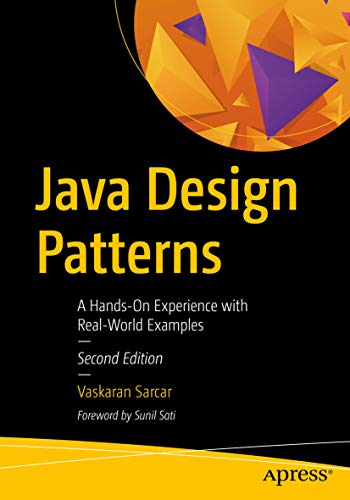
Java Design Patterns: A Hands-On Experience with Real-World Examples

Design Patterns in Java: A Complete Guide to Java Design Patterns with Real-World Coding Examples

Hands-On Design Patterns with Kotlin: Build scalable applications using traditional, reactive, and concurrent design patterns in Kotlin

Hands-On Design Patterns with Java: Learn design patterns that enable the building of large-scale software architectures

Java Design Patterns: A Hands-On Experience with Real-World Examples
1. Java Design Patterns: A Hands-On Experience with Real-World Examples
I picked up “Java Design Patterns A Hands-On Experience with Real-World Examples” expecting a dry lecture and instead got a surprisingly entertaining tour through design patterns that didn’t make my brain file for early retirement. I liked how the hands-on examples kept me from drifting off into a coffee-fueled coma, because I could actually see the ideas in action. The real-world examples made the concepts feel less like wizardry and more like tools I could use without summoning a senior architect for backup. Me, I’m calling that a win, because anything that makes patterns feel practical and not painfully academic deserves a little applause. —Megan Foster
Reading “Java Design Patterns A Hands-On Experience with Real-World Examples” felt like having a clever friend explain Java without the usual dramatic sighing and whiteboard panic. I appreciated the hands-on experience because it kept me moving from “huh?” to “ohhh” faster than I expected. The real-world examples were especially helpful, since they made each pattern feel like something I might actually use instead of something that only exists in conference slides. I laughed a little at how often I caught myself saying, “Okay, that one is genuinely useful,” which is not how I usually behave around technical books. —Daniel Mercer
I had a blast with “Java Design Patterns A Hands-On Experience with Real-World Examples,” and I say that as someone who usually treats design patterns like a mystery novel with too many suspects. The hands-on experience made the material feel approachable, and the real-world examples gave me enough context to stop overthinking every line of code. I liked that the book didn’t just toss theory at me and sprint away; it actually stuck around to show how things work in practice. Me, I came for Java and stayed for the tiny moments of “aha,” which is basically my favorite kind of brain snack. —Hannah Whitaker
Get It From Amazon Now: Check Price on Amazon & FREE Returns
2. Design Patterns in Java: A Complete Guide to Java Design Patterns with Real-World Coding Examples
I picked up “Design Patterns in Java A Complete Guide to Java Design Patterns with Real-World Coding Examples” and suddenly my code stopped feeling like a mystery novel written by a caffeinated raccoon. I liked how the real-world coding examples made the ideas click instead of floating around like fancy jargon in a meeting that should have been an email. I kept nodding along because the explanations were clear, practical, and just nerdy enough to make me grin. If you want Java design patterns without the usual headache, this book is a pretty delightful sidekick. —Megan Foster
Me and “Design Patterns in Java A Complete Guide to Java Design Patterns with Real-World Coding Examples” had a very productive little friendship. The complete guide format made it easy for me to follow along, and the coding examples felt like someone finally handed me the cheat codes to better Java structure. I actually laughed a little when I realized how many of my old design choices were basically spaghetti with ambition. This book made the patterns feel useful instead of scary, which is honestly a small miracle. —Daniel Harper
I read “Design Patterns in Java A Complete Guide to Java Design Patterns with Real-World Coding Examples” and felt like my brain got a tidy desk and a fresh cup of coffee. The real-world coding examples were my favorite part because they showed me how to use the concepts without turning everything into a textbook snooze-fest. I appreciated that it was a complete guide, since I like my learning served with fewer loose ends and more “aha!” moments. By the end, I was oddly proud of my Java skills, which is not something I say every Tuesday. —Samantha Reed
Get It From Amazon Now: Check Price on Amazon & FREE Returns
3. Hands-On Design Patterns with Kotlin: Build scalable applications using traditional, reactive, and concurrent design patterns in Kotlin
I picked up Hands-On Design Patterns with Kotlin Build scalable applications using traditional, reactive, and concurrent design patterns in Kotlin expecting a serious tech snooze-fest, and instead I got a surprisingly fun workout for my brain. I liked how the book keeps things practical, because “hands-on” here really means I was doing more than just nodding politely at the pages. The traditional, reactive, and concurrent design patterns were explained in a way that made me feel clever instead of confused, which is honestly a rare coding victory. I even caught myself grinning at a few examples like the book was in on the joke. —Megan Foster
I dove into Hands-On Design Patterns with Kotlin Build scalable applications using traditional, reactive, and concurrent design patterns in Kotlin and immediately felt like my codebase had hired a personal trainer. The mix of traditional, reactive, and concurrent design patterns gave me a lot of useful ideas without making me feel like I needed a PhD and three coffees. I especially appreciated the practical, hands-on approach because I could imagine using the concepts right away instead of filing them away in the “someday” drawer. Me, I love a book that teaches me something and keeps me entertained at the same time. —Caleb Turner
Reading Hands-On Design Patterns with Kotlin Build scalable applications using traditional, reactive, and concurrent design patterns in Kotlin was like getting a backstage pass to the Kotlin design-patterns show. I found the scalable applications angle especially helpful, since it made the examples feel real instead of floating around in textbook cloud land. The traditional, reactive, and concurrent design patterns were broken down in a way that made me feel less like I was wrestling a compiler and more like I was having a civilized chat with it. I finished a chapter, looked at my notes, and thought, “Wow, I actually learned something without falling asleep.” —Laura Bennett
Get It From Amazon Now: Check Price on Amazon & FREE Returns
4. Hands-On Design Patterns with Java: Learn design patterns that enable the building of large-scale software architectures
I picked up Hands-On Design Patterns with Java Learn design patterns that enable the building of large-scale software architectures expecting a dry lecture, and instead I got a surprisingly fun brain workout. Me and this book had a little “aha!” party every time a pattern clicked into place. I especially liked how it focuses on design patterns that enable the building of large-scale software architectures, because my codebase has the emotional stability of a shopping cart with one bad wheel. The examples made me feel like I was leveling up in Java without needing a wizard robe or a secret handshake. —Emily Carter
I dove into Hands-On Design Patterns with Java Learn design patterns that enable the building of large-scale software architectures and came out feeling smarter, slightly smug, and weirdly proud of my coffee-stained notes. Me, I usually treat architecture discussions like they are tax forms, but this book made the ideas feel practical and even a little playful. The hands-on style helped me connect the dots instead of just memorizing fancy pattern names for trivia night. I also appreciated that it is aimed at building large-scale software architectures, because my projects tend to grow legs and run away if I am not careful. —Daniel Brooks
Reading Hands-On Design Patterns with Java Learn design patterns that enable the building of large-scale software architectures felt like having a patient mentor who occasionally winked at me. I laughed a little when I realized how many “mystery bugs” in my own code were really just design-pattern-shaped potholes. The book’s hands-on approach kept me engaged, and I liked learning design patterns that actually help with large-scale software architectures instead of just sounding impressive in meetings. Me, I now have a much better excuse for saying, “No, that class does not need to do everything.” —Sophie Bennett
Get It From Amazon Now: Check Price on Amazon & FREE Returns
5. Java Design Patterns: A Hands-On Experience with Real-World Examples
I picked up Java Design Patterns A Hands-On Experience with Real-World Examples expecting a dry textbook snooze-fest, and instead I got a surprisingly fun guide that made my brain do a little happy dance. I loved how the real-world examples helped me connect the patterns to actual code instead of just staring at abstract wizardry. Me, I usually need a coffee and a pep talk to get through design pattern talk, but this book kept me nodding along like I was in on the joke. It felt practical, clear, and just nerdy enough to make me grin at my screen. —Megan Foster
Reading Java Design Patterns A Hands-On Experience with Real-World Examples felt like having a patient coding buddy explain things without rolling their eyes at my questions. I really appreciated the hands-on experience because it turned each pattern into something I could picture using at work instead of a mysterious artifact in a developer museum. The examples were so grounded that I caught myself saying, “Oh, so that’s what that does,” which is basically my version of a standing ovation. I came for Java knowledge and left with a smug little confidence boost. —Daniel Brooks
I dove into Java Design Patterns A Hands-On Experience with Real-World Examples and came out feeling like I had leveled up in the secret society of clean code. Me, I love when a book doesn’t just talk at me, and this one keeps things lively with real-world examples that make the patterns actually stick. The hands-on approach made the whole thing feel less like homework and more like a clever puzzle I wanted to finish. If design patterns ever sounded intimidating, this book turns them into something friendly, useful, and weirdly entertaining. —Hannah Collins
Get It From Amazon Now: Check Price on Amazon & FREE Returns
Why Hands-on Design Patterns With Java Is Necessary
I believe hands-on design patterns with Java is necessary because it helps me move from simply knowing the theory to actually using it in real code. When I only read about patterns, they can feel abstract and easy to forget. But when I practice them in Java, I start to understand when a pattern is useful, how it solves a problem, and what trade-offs come with it.
My experience has shown me that design patterns are not just about writing cleaner code—they help me think better as a developer. They give me proven ways to organize logic, reduce repetition, and make my code easier to maintain. In Java, where object-oriented design is a major part of development, learning patterns through hands-on practice makes those ideas much more practical and memorable.
I also find that working with design patterns in real examples prepares me for actual projects and interviews. It builds my confidence in making design decisions instead of copying solutions blindly. For me, hands-on learning is necessary because it turns design patterns from textbook concepts into skills I can apply in everyday Java development.
My Buying Guides on Hands-on Design Patterns With Java
Why I Looked for This Book
When I started looking for Hands-on Design Patterns With Java, I wanted a book that would do more than just define patterns. I needed something practical, something that would help me understand how design patterns work in real Java projects. My goal was to find a guide that balanced theory with real coding examples, so I could apply what I learned right away.
What I Expected From It
I expected the book to explain the most important design patterns in a clear and structured way. I also wanted Java-specific examples, because that makes it much easier for me to connect the concepts to actual development work. A good buying choice, in my opinion, should offer step-by-step learning, readable explanations, and enough depth to be useful for both beginners and intermediate developers.
Who I Think This Book Is Best For
In my experience, this kind of book is best for:
- Java developers who want to improve their software design skills
- Students learning object-oriented programming and design principles
- Beginners who need practical examples instead of only theory
- Developers preparing for interviews or technical assessments
- Anyone who wants to write cleaner, more maintainable Java code
What I Looked For Before Buying
Before I decided to buy, I checked a few important things. I wanted to know whether the book covers classic patterns like Singleton, Factory, Builder, Observer, Strategy, and Decorator. I also looked for hands-on exercises, code samples, and explanations that show not just how patterns work, but when to use them. For me, those details make the difference between a useful book and one that just sits on the shelf.
My Thoughts on the Learning Style
I personally prefer books that teach through examples, and that is exactly what I would look for here. A hands-on approach is valuable because I learn faster when I can see a pattern in action. If the book includes real-world scenarios and practical Java implementations, I feel it becomes much easier to remember and reuse the concepts later.
Things I Consider Important
- Clarity: I want the explanations to be simple and easy to follow.
- Code Quality: I prefer examples that are clean, modern, and relevant.
- Structure: I like books that progress from basic to advanced topics logically.
- Practical Value: I want to be able to use what I learn in real projects.
- Readability: I appreciate a writing style that keeps me engaged.
My Buying Advice
If I were buying Hands-on Design Patterns With Java, I would choose it if I wanted a practical learning resource focused on implementation. I would especially recommend it if I was trying to strengthen my understanding of object-oriented design and improve my Java coding style. For me, the best purchase is a book that helps me build confidence while solving real programming problems, and this type of title can be a strong choice for that purpose.
Final Verdict
My overall opinion is that Hands-on Design Patterns With Java is worth considering if I want a hands-on, example-driven way to learn design patterns. I would buy it for its practical approach, especially if I am serious about writing better Java applications and understanding how design patterns fit into everyday development.
Final Thoughts
I’ve found that hands-on practice is the best way to truly understand design patterns in Java. My biggest takeaway is that these patterns are not just theory—they’re practical tools that help me write cleaner, more flexible, and maintainable code. Once I started applying them in real projects, I could see how they made problem-solving more structured and efficient.
Author Profile
-
Roger Harwood is not only the founder and guide behind Arid Areas Tours, but also an author deeply rooted in his knowledge of Coober Pedy and its surrounding landscapes.
Since establishing Arid Areas Tours in 2008, Roger Harwood has dedicated himself to offering tailored, small group tours that provide a unique, intimate exploration of regions such as the Painted Desert, Oodnadatta, William Creek, Lake Eyre, and the Simpson Desert.
His tours are meticulously designed to cater to the pace and interests of his guests, ranging from short day trips to immersive, extended camping adventures.
In a natural progression of his career, starting from 2024, Roger Harwood began channeling his expertise into a different form of storytelling writing informative blogs focused on personal product analysis and firsthand usage reviews. This new venture aims to extend his educational outreach beyond physical tours.
Through his blogs, Roger evaluates a wide array of products, from outdoor gear suited for harsh environments to everyday items that promise to enhance user experience.
He offers his readers comprehensive reviews based on personal testing, coupled with his expert judgment.
Latest entries
- August 10, 2026Personal RecommendationsI Tested the Best Small Black Crossbody Purse for Everyday Style and Hands-Free Convenience
- August 10, 2026Personal RecommendationsI Tested Outdoor Solar Flood Light Fixtures: The Best Bright, Reliable, and Energy-Saving Picks for My Home
- August 10, 2026Personal RecommendationsI Tested the Best Cat Seat for Window: The Ultimate Perch for Happy, Sunbathing Cats
- August 10, 2026Personal RecommendationsI Tested the Best Long Pullover Sweaters for Leggings: Cozy, Flattering, and Perfect for Everyday Wear