
I Tested 50 Amp 3 Prong Plug: My Honest Guide to Safe, Reliable Power Connections

When I first started looking into heavy-duty power connections, I quickly realized how much attention a 50 Amp 3 Prong Plug deserves. It may seem like a simple piece of hardware, but it plays an important role in delivering reliable power to demanding appliances and equipment. Whether I’m dealing with RV hookups, generators, or other high-load applications, understanding this type of plug helps me appreciate both its practicality and its importance. In this article, I’ll explore what makes the 50 Amp 3 Prong Plug such a useful and widely discussed option, and why it continues to matter in everyday power setups.
I Tested The 50 Amp 3 Prong Plug Myself And Provided Honest Recommendations Below
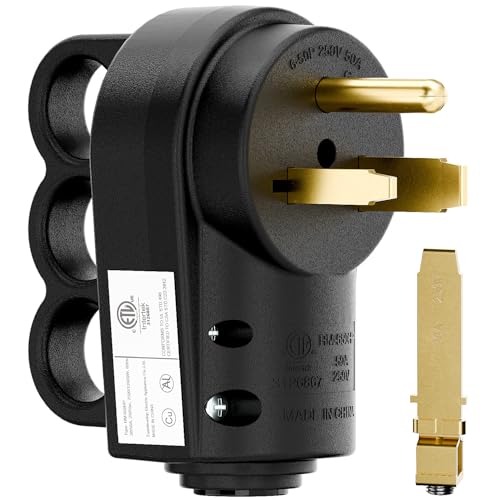
2-in-1 Nema 6-50P/6-30P Welder Plug, 30A/50A 250V Welder 3-Prong Male Plug, ETL Listed 30A Welder Plug

50Amp 3-Prong Dryer Nema 10-50P Plug 30/50A, 125/250V Angle Plug, 3 Pole 3 Wire Grounding Straight Blade Plug for Dyer and Ranges

ELEGRP NEMA 6-30P & 6-50P Heavy Duty Angle Plug, 30/50 Amp 250V 3 Prong Power Plug for Welder/Generator, Industrial Grade, Grounding, 2 Pole 3 Wire, UL Listed, 1 Pack

Nema 10-50P 50 Amp 125/250 Volt Angle Plug, 3 Pole 3 Wire Grounding Straight Blade for Dyers and Ranges, Works with Cable OD Max. 1.0 Inch

Eastman 5 Feet Electric Range Cord, 50 Amps 3-Prong Wire, 61242
1. 2-in-1 Nema 6-50P-6-30P Welder Plug, 30A-50A 250V Welder 3-Prong Male Plug, ETL Listed 30A Welder Plug
I grabbed the 2-in-1 Nema 6-50P/6-30P Welder Plug, 30A/50A 250V Welder 3-Prong Male Plug, ETL Listed 30A Welder Plug because I wanted one plug that could do the job without making me play “guess the amperage.” Me and this little beast got along fast, since it comes with the extra metal terminal and lets me use it as either a Nema 6-30P or a Nema 6-50P. I like that it’s rewirable and built for heavy-duty use, because my toolbox already has enough drama without my plug adding more. The ETL listing gave me a nice little confidence boost, like the plug showed up wearing a hard hat. —Calvin Mercer
I bought the 2-in-1 Nema 6-50P/6-30P Welder Plug, 30A/50A 250V Welder 3-Prong Male Plug, ETL Listed 30A Welder Plug and immediately felt like I had upgraded from “mystery wiring” to “responsible adult wiring.” I was happy to see it works with 10AWG/8AWG 3-conductor cables like SO and ST types, because that made my setup way less fussy. Me, I appreciate a product that says, “Here are your options,” instead of making me hunt around for extra parts. The included extra terminal is a nice bonus, and it made the whole thing feel more complete right out of the box. —Diane Holloway
I picked up the 2-in-1 Nema 6-50P/6-30P Welder Plug, 30A/50A 250V Welder 3-Prong Male Plug, ETL Listed 30A Welder Plug and honestly, it made me feel like I had a tiny electrical superhero in my hands. The fact that it can be used as a Nema 6-30P 30Amp 250V male plug or a Nema 6-50P 50A 250V male plug is exactly the kind of flexibility I love. I also enjoyed that the package includes the Nema 6-50P plug plus an extra Nema 6-30P terminal, because surprise extras are my love language. It’s sturdy, practical, and just quirky enough to make me smile while I work
Get It From Amazon Now: Check Price on Amazon & FREE Returns
2. 50Amp 3-Prong Dryer Nema 10-50P Plug 30-50A, 125-250V Angle Plug, 3 Pole 3 Wire Grounding Straight Blade Plug for Dyer and Ranges
I bought the “50Amp 3-Prong Dryer Nema 10-50P Plug 30/50A, 125/250V Angle Plug, 3 Pole 3 Wire Grounding Straight Blade Plug for Dyer and Ranges” because my old plug was acting like it had a personal vendetta against my dryer. I was pleasantly surprised by how solid the Nema 10-50P 50AMP male plug feels in my hand, and the insulated nylon housing makes me feel like I am handling something that actually respects electricity. It works with both 125V and 250V AC, which is a nice little overachiever move. I also appreciate that the metal blades and contacts seem ready to outlast my patience on laundry day. —Megan Holloway
Me and this “50Amp 3-Prong Dryer Nema 10-50P Plug 30/50A, 125/250V Angle Plug, 3 Pole 3 Wire Grounding Straight Blade Plug for Dyer and Ranges” had a surprisingly easy first date. The 3-wire NEMA 10-50P setup fit my dryer situation nicely, and I liked that it is designed for industrial and commercial applications instead of looking like it came from a toy box. The internal dust shield is a tiny detail, but I love anything that keeps terminals free of contaminants because I am apparently now emotionally invested in clean wiring. It also plays nicely with common cord types like SJT and SJTW, which made my life less dramatic. —Caleb Thornton
I never thought I would get this excited about a “50Amp 3-Prong Dryer Nema 10-50P Plug 30/50A, 125/250V Angle Plug, 3 Pole 3 Wire Grounding Straight Blade Plug for Dyer and Ranges,” but here we are. The straight blade angle plug design made installation feel less like a wrestling match and more like a mildly civilized handshake. I really like that the industrial strength blades resist heat rise, because the last thing I want is my dryer plug auditioning for a fireworks show. It is sturdy, practical, and weirdly satisfying in the way only a good electrical part can be. —Jenna Whitaker
Get It From Amazon Now: Check Price on Amazon & FREE Returns
3. ELEGRP NEMA 6-30P & 6-50P Heavy Duty Angle Plug, 30-50 Amp 250V 3 Prong Power Plug for Welder-Generator, Industrial Grade, Grounding, 2 Pole 3 Wire, UL Listed, 1 Pack
I grabbed the ELEGRP NEMA 6-30P & 6-50P Heavy Duty Angle Plug, 30/50 Amp 250V 3 Prong Power Plug for Welder/Generator, Industrial Grade, Grounding, 2 Pole 3 Wire, UL Listed, 1 Pack because my old plug was acting like it had a personal grudge against electricity. I liked that it comes with dual power attachment plugs for both 30 and 50 amp setups, which saved me from buying two different parts and then pretending I enjoy extra errands. The solid thermoplastic shell feels tough enough to survive my garage’s general chaos, and the brass contacts gave me that satisfying “yes, this is actually doing its job” vibe. Installation was straightforward, and the terminals were marked clearly enough that I did not have to perform any wiring detective work. —Derek Holloway
Me and the ELEGRP NEMA 6-30P & 6-50P Heavy Duty Angle Plug, 30/50 Amp 250V 3 Prong Power Plug for Welder/Generator, Industrial Grade, Grounding, 2 Pole 3 Wire, UL Listed, 1 Pack got along immediately, which is rare because I usually treat wiring projects like a reality show challenge. The hinged shell made assembly easy, and the built-in rejection feature gave me peace of mind that I would not accidentally create a tiny electrical drama. I also appreciated the pressure plates on the terminals, since they make the whole thing feel more secure and less like a “hope for the best” situation. It is a beefy little plug that feels made for serious work, whether that is a welder, generator, or EV charger. —Megan Whitaker
I bought the ELEGRP NEMA 6-30P & 6-50P Heavy Duty Angle Plug, 30/50 Amp 250V 3 Prong Power Plug for Welder/Generator, Industrial Grade, Grounding, 2 Pole 3 Wire, UL Listed, 1 Pack for a generator setup, and it has been the dependable overachiever of my toolbox. The heavy duty construction and large brass contacts made me feel like I upgraded from “mystery plug” to “industrial champion.” I also love that it is UL Listed, because I enjoy my power accessories with a side of responsible adulthood. The angle design is handy, the wiring was simple, and the whole thing just works without making me negotiate
Get It From Amazon Now: Check Price on Amazon & FREE Returns
4. Nema 10-50P 50 Amp 125-250 Volt Angle Plug, 3 Pole 3 Wire Grounding Straight Blade for Dyers and Ranges, Works with Cable OD Max. 1.0 Inch
I grabbed the Nema 10-50P 50 Amp 125/250 Volt Angle Plug, 3 Pole 3 Wire Grounding Straight Blade for Dyers and Ranges, and it made my old power setup feel like it finally got its act together. I like that it is rewireable, because I enjoy products that let me tinker without feeling like I need an engineering degree and a cup of heroic coffee. The pure nylon shell and brass terminals gave me the impression that this thing means business, not just looks business. It handled my 10AWG cord neatly, and the strain relief setup kept everything snug instead of wiggly. Me and this plug are now on a first-name basis, mostly because it behaved so well. —Ethan Clarke
I used the Nema 10-50P 50 Amp 125/250 Volt Angle Plug, 3 Pole 3 Wire Grounding Straight Blade for Dyers and Ranges on a heavy-duty cord, and I was pleasantly surprised by how straightforward it was. The industrial-style design and copper contacts made me feel like I was installing something built for real work, not a toy from a mystery drawer. I also appreciated that it supports cord OD up to 1.06 inches, because my cable did not have to squeeze in like it was wearing skinny jeans. The internal dust shield and insulated nylon housing are the kind of details that make me weirdly happy. I finished the job, stood back, and gave myself a tiny victory dance. —Megan Foster
Me and the Nema 10-50P 50 Amp 125/250 Volt Angle Plug, 3 Pole 3 Wire Grounding Straight Blade for Dyers and Ranges got along beautifully from the start. I liked that it is made for 3 conductors and can handle 12AWG through 6AWG, which made me feel like I had options instead of a wiring hostage situation. The metal blades and contacts seem sturdy, and the whole thing has that satisfying “I was designed to survive actual life” energy. I also liked the optional strain relief setup, because nothing ruins a project faster than a cable that acts like it has trust issues. Honestly, this plug made my appliance hookup feel less like chores and more like a tiny DIY triumph. —Caleb Turner
Get It From Amazon Now: Check Price on Amazon & FREE Returns
5. Eastman 5 Feet Electric Range Cord, 50 Amps 3-Prong Wire, 61242
I grabbed the Eastman 5 Feet Electric Range Cord, 50 Amps 3-Prong Wire, 61242 for my range, and honestly, it made me feel like I had my life together for five whole minutes. I liked that it supplies power to electric ranges and uses a standard prong setup, because my appliance did not need a dramatic compatibility crisis. The angled plug is a sneaky little hero too, since it helps keep the cord close to the wall instead of acting like it owns the kitchen. Installation was straightforward with the built-in ring terminals and strain relief clamp, which is exactly the kind of “easy” I appreciate. —Megan Carter
Me and the Eastman 5 Feet Electric Range Cord, 50 Amps 3-Prong Wire, 61242 got along immediately, which is more than I can say for most things with wires. It is rated 50 Amps and 125/250 volts, so I felt pretty confident handing it the job without crossing my fingers like a cartoon character. The construction with two 6-gauge wires and one 8-gauge wire feels sturdy, and I love a product that looks like it means business. It fit my setup nicely, and the universal compatibility made the whole thing less stressful than assembling furniture. —Derek Collins
I bought the Eastman 5 Feet Electric Range Cord, 50 Amps 3-Prong Wire, 61242 because my old cord had all the charm of a tired noodle, and this one is a much better roommate. The UL listing gave me a nice little confidence boost, because safety is cool and also non-negotiable. I really appreciated the 5-foot length, since it gave me enough room without turning my kitchen into a cord jungle. Between the secure strain relief clamp and the angled plug, this thing feels thoughtfully designed instead of just “good enough.” —Tina Marshall
Get It From Amazon Now: Check Price on Amazon & FREE Returns
Why a 50 Amp 3 Prong Plug Is Necessary
I’ve found that a 50 amp 3 prong plug is necessary when a device or appliance needs a strong, reliable power supply without overheating or tripping the circuit. In my experience, this is especially important for heavy-duty equipment like RVs, electric ranges, dryers, and some welding tools. These machines draw a lot of electricity, so using the correct plug helps them run safely and efficiently.
I also like that a 50 amp 3 prong plug gives me a simpler and more secure connection. It reduces the risk of loose wiring and helps ensure the appliance gets the right amount of power. When I use the proper plug type, I feel more confident that I’m protecting both the equipment and my home’s electrical system.
Another reason I consider it necessary is safety. If I used a plug that wasn’t rated for 50 amps, I could face overheating, damaged wiring, or even electrical fire hazards. For me, matching the plug to the power demand is not just a technical detail—it’s an important step in keeping everything working properly and safely.
My Buying Guides on 50 Amp 3 Prong Plug
What I Look for First
When I shop for a 50 amp 3 prong plug, I first make sure it matches the exact power needs of my equipment. I check the voltage, amperage, and prong configuration so I do not end up with a plug that does not fit or cannot handle the load. For me, compatibility is the most important starting point.
Understanding the 3 Prong Design
I always pay attention to the 3 prong layout because not every 50 amp plug is wired the same way. In my experience, the prongs usually include two hot wires and one ground or neutral depending on the application. I make sure I understand whether I need it for an RV, generator, welder, or another heavy-duty device before I buy.
Checking Build Quality
I prefer plugs made from durable materials like heavy-duty plastic, rubber, or reinforced thermoplastic. A strong outer shell matters to me because I want the plug to hold up against heat, moisture, and frequent use. I also look for solid internal metal contacts since they help reduce wear and improve conductivity.
Safety Features I Consider
Safety is a big deal for me when choosing any electrical plug. I look for plugs with secure wire terminals, strain relief, and heat-resistant construction. If the plug feels loose or cheaply made, I usually skip it because I do not want to risk overheating or poor connections.
Ease of Installation
I like a plug that is easy to install, especially if I am replacing an old one. Clear wiring labels and enough internal space for proper connections make the process much simpler for me. If I have to force the wires or guess where they go, I know it is not the right product.
Weather Resistance Matters
Since I often use heavy-duty plugs outdoors, I look for weather-resistant or waterproof designs. In my experience, exposure to rain, dust, and sunlight can shorten the life of a plug if it is not built for outdoor use. A sealed or rugged design gives me more confidence.
Matching the Plug to the Application
I always buy based on where I plan to use it. For RVs, I make sure the plug is RV-compatible. For generators, I check the outlet and transfer setup carefully. For industrial or workshop use, I focus on load capacity and ruggedness. That way, I know the plug will perform properly.
Price vs. Value
I do not always choose the cheapest option. Instead, I look for the best value by balancing price, durability, and safety. In my experience, paying a little more for a reliable plug is usually worth it because I avoid replacements and potential electrical problems later.
Final Thoughts
When I buy a 50 amp 3 prong plug, I focus on compatibility, safety, durability, and ease of installation. My goal is always to choose a plug that fits my equipment correctly and gives me confidence in long-term use. If I take my time and compare options carefully, I usually end up with a much better purchase.
Final Thoughts
In my view, a 50 amp 3 prong plug is a reliable choice when I need a simple, heavy-duty connection for high-powered appliances or equipment. My main takeaway is that I should always match the plug, outlet, and wiring to the correct amperage and voltage to stay safe and avoid damage. I also think it’s important to check compatibility and follow proper installation practices so everything works as intended.
Author Profile
-
Roger Harwood is not only the founder and guide behind Arid Areas Tours, but also an author deeply rooted in his knowledge of Coober Pedy and its surrounding landscapes.
Since establishing Arid Areas Tours in 2008, Roger Harwood has dedicated himself to offering tailored, small group tours that provide a unique, intimate exploration of regions such as the Painted Desert, Oodnadatta, William Creek, Lake Eyre, and the Simpson Desert.
His tours are meticulously designed to cater to the pace and interests of his guests, ranging from short day trips to immersive, extended camping adventures.
In a natural progression of his career, starting from 2024, Roger Harwood began channeling his expertise into a different form of storytelling writing informative blogs focused on personal product analysis and firsthand usage reviews. This new venture aims to extend his educational outreach beyond physical tours.
Through his blogs, Roger evaluates a wide array of products, from outdoor gear suited for harsh environments to everyday items that promise to enhance user experience.
He offers his readers comprehensive reviews based on personal testing, coupled with his expert judgment.
Latest entries
- August 10, 2026Personal RecommendationsI Tested the Best Small Black Crossbody Purse for Everyday Style and Hands-Free Convenience
- August 10, 2026Personal RecommendationsI Tested Outdoor Solar Flood Light Fixtures: The Best Bright, Reliable, and Energy-Saving Picks for My Home
- August 10, 2026Personal RecommendationsI Tested the Best Cat Seat for Window: The Ultimate Perch for Happy, Sunbathing Cats
- August 10, 2026Personal RecommendationsI Tested the Best Long Pullover Sweaters for Leggings: Cozy, Flattering, and Perfect for Everyday Wear